
Gym and Small Business Automation: Making Daily Operations More Organized
Gym and small business automation supports more organized lighting, climate control, energy, and water management based on actual operational needs. Discover practical applications for Syrian businesses, with attention to reliability, privacy, and ongoing maintenance.
Business· · 5 min read
A business does not need dozens of connected devices to become smarter. In a gym, the problem might be lights left on in an empty training area, air conditioning running after closing hours, or a water pump that stopped without staff noticing. Offices, clinics, and retail stores may experience similar issues, although their priorities differ.
Useful automation begins by understanding these everyday details and connecting essential systems through a clear operational approach. The goal is not to replace employees or automate every task. It is to reduce repetitive work, improve facility monitoring, and give managers information they can act on. In Syria, the design must also account for electricity outages, changing power sources, inconsistent internet connectivity, and the specific operating conditions of each business.
Identifying What Actually Needs Automation
Before choosing sensors or controllers, it is helpful to examine a typical working day. When does the business open? Who turns on the lighting and air conditioning? Who checks water tanks and pumps? How does the manager know whether equipment has been left running after closing?
These questions may reveal small but recurring problems, such as forgotten storage-room lighting or unusually high energy consumption from certain equipment. The next step is deciding which functions would benefit from automatic control and which simply require monitoring or notifications.
Not every function should be automated. Some equipment requires human decisions, independent safety mechanisms, or a specific operating sequence. Automation scenarios should therefore be documented, including who can change settings and how the system should respond when a component becomes unavailable. A clearly defined project scope also makes testing and maintenance easier while avoiding unnecessary features that provide little operational value.
What Can Be Automated in a Gym?
Gym requirements vary according to training areas, operating hours, changing rooms, showers, and the installed ventilation and climate-control equipment. A single schedule for the entire building is rarely sufficient.
Lighting in corridors and service areas can be connected to operating schedules or occupancy, while preserving lighting needed for safety. Training areas require a different approach. Automation should account for actual activities so that lights do not unexpectedly switch off when movement temporarily stops during an exercise or group class.
Air conditioning and ventilation can use operating hours, temperature measurements, and available system information to reduce unnecessary operation. However, indoor air quality and member comfort must remain essential priorities. Attempts to reduce energy consumption should not result in insufficient ventilation.
Monitoring water tank levels, pumps, and water heaters can also help identify unusual operating conditions and notify the responsible staff. Electrical and mechanical safety protections should remain independent of the general automation platform. For gym management, a unified dashboard showing important areas and equipment may be more useful than a separate application for every device.
Practical Applications for Offices, Clinics, and Retail Businesses
In an office, lighting in meeting rooms and shared spaces can be adjusted according to occupancy, while selected equipment can follow schedules outside working hours. Energy monitoring may also reveal electrical loads that continue operating overnight without a clear reason.
In clinics, patient comfort, privacy, and the continuity of essential equipment take priority over energy-saving scenarios. Waiting-area lighting and selected environmental conditions can be monitored or controlled. However, medical equipment and systems used to store sensitive materials should not be connected to general automation without specialist assessment and appropriate protective requirements.
Retail stores and restaurants may benefit from scheduled lighting and storefront illumination, temperature monitoring in designated areas, and notifications associated with storage-room doors or water leaks. The appropriate solution depends on the type of business and its equipment. The same automation scenario should not automatically be applied to every location.
Combining information about lighting, climate control, energy, water, and security within one interface can make daily management more convenient. However, essential functions such as fire protection and emergency exits must remain subject to their independent safety requirements.
Designing for Syrian Operating Conditions
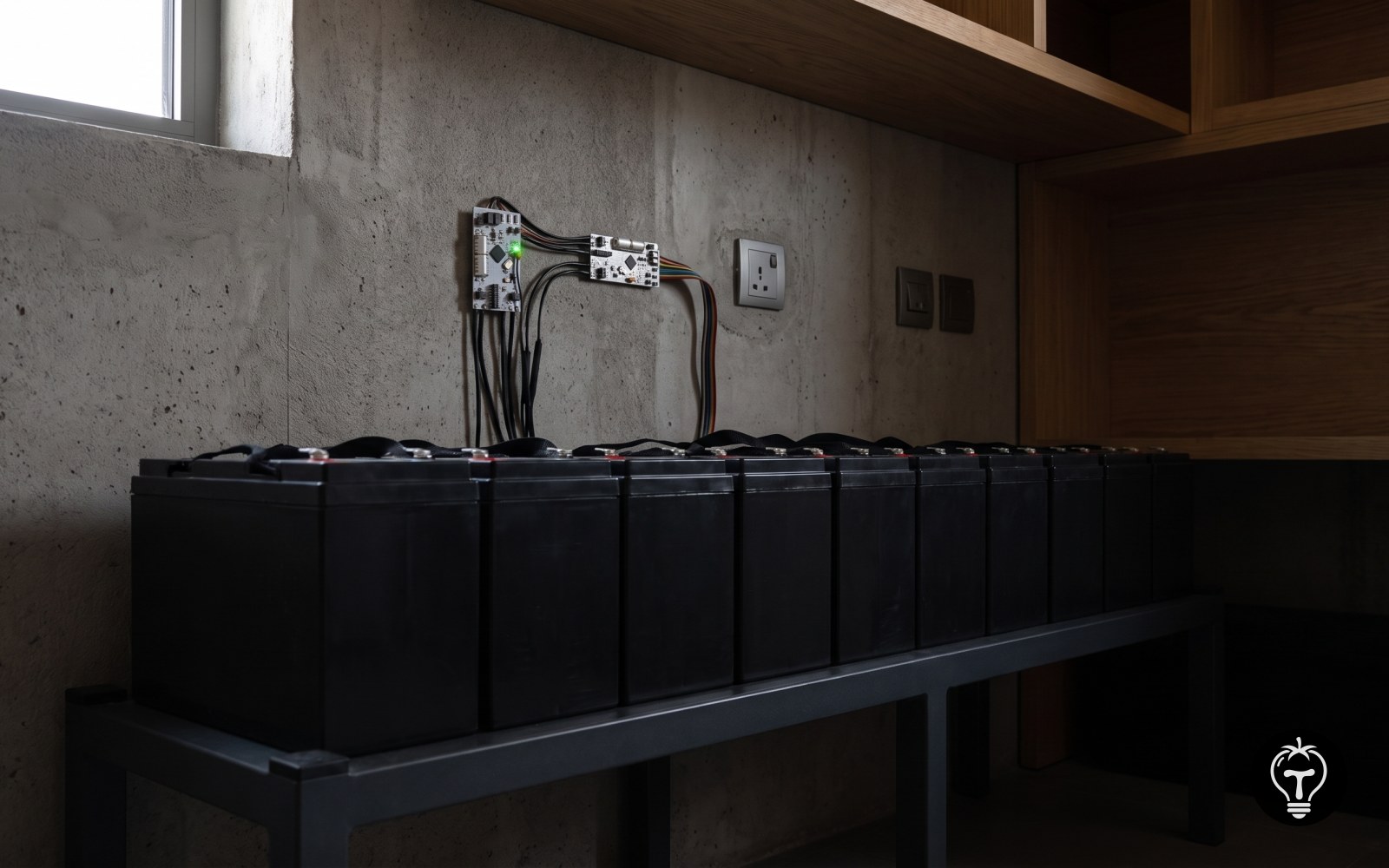
Throughout the day, a business may switch between public electricity, generator power, solar energy, and batteries. Internet access may also become unavailable while operations inside the building continue. For these reasons, power infrastructure should be assessed before determining how devices will communicate.
Where compatible equipment is available, essential functions can be designed to operate over a local network, with suitable power arrangements for controllers and networking equipment. External notifications and remote access, however, may become temporarily unavailable during internet outages.
It is also important to define what happens after power is restored. Should the lighting return to its previous state? Should a water pump restart immediately? The answer depends on the connected equipment and its safety requirements. Such behavior should never be left to untested default settings. Technology selection should consider more than the distinction between wired and wireless communication. Coverage, reliability, maintainability, and compatibility with existing equipment all matter.
Phased Implementation, Privacy, and Support
A practical starting point is to inspect the property, identify a specific operational problem, and test automation in a limited area before expanding it. For example, a business might begin with shared-area lighting or electricity monitoring, then evaluate the results together with the staff who operate the facility.
Management should have appropriate permissions to view system status and adjust approved settings. Access to cameras, operational data, and records should be restricted according to employee responsibilities. The project should also clearly establish what information is recorded, who may access it, and how passwords and backups are managed.
Installation is only one stage of the process. Automation scenarios should be tested, power and connectivity interruptions should be simulated where safe, and responsible staff should receive training in manual operation and notification handling.
At TOMATICO, we approach automation as a complete project involving assessment, design, installation, configuration, testing, and support rather than a collection of individual devices. If you operate a gym or small business, you can request a consultation or preliminary estimate to identify which automation opportunities are most relevant to your property.